Jon Lord

Jon Lord - Windows

20. April 2017 · Audio · andreas · 1 Kommentar
Dieser Beitrag ist in Deutsch nicht verfügbar.

Jon Lord - Windows (Cover)Three weeks after the new Deep Purple album “inFinite” hit the stores, Edel will continue the series of Jon Lord re-releases with “Windows”, an album featuring a cooperation between Jon Lord and conductor and composer Eberhard Schoener. Schoener, who was also involved in progressive rock masterpieces like “The Turn of a Friendly Card” by The Alan Parsons Project may be best known for being the creator of the main theme for the TV series “Derrick”.

“Windows” was recorded live at the Herkulessaal in Munich on June 1st 1974 as closing performance of the “Prix Jeunesse International” festival under the “Rock meets Classic” banner and was broadcasted by German TV station Bayerischer Rundfunk to a potential audience of 300 million people.

The album consists of two parts, the 18 minute piece “Continuo on B.A.C.H.” and the name-giving 32 minute “Window” (without “s”), both composed by Jon Lord and Eberhard Schoener.

“Continuo on B.A.C.H.” plays with the idea of continuing on “The Unfinished Fugue”, the last part of “The Art of Fugue” by Johann Sebastian Bach and features way more Jazz influences than focussing on Jon Lords hard rock background (as the two predecessors “Concerto for Group and Orchestra” and “Gemini Suite” did) using the orchestra more as soloists than using them in a more conventional rock meets classic way.

The first part of “Window”, called “1st Movement - Renga”, was composed by Eberhard Schoener and starts with a more blues-like feeling featuring the voice of David Converdale, later contrasted by two sproaons, who make this part hard to enjoy in its entirety.

As the name hints, the second part “2nd Movement - Gemini” recycles the vocal section from “Gemini Suite”, likely some sort of compromise because Jon Lord and Eberhard Schoener were running out of time. “Windows” was a contract work for the Bayerische Rundfunk to close the Prix Jeunesse International festival and had to be finished in time.

The closing “3rd Movement - Alla Marcia: Allegro”, composed by Jon Lord reminds of “Gemini Suite” but also includes moments which would later become parts of “Sarabande”, Jon Lords next solo work.

The band consited of Jon Lord on piano, organ and keyboards, his Deep Purple bandmates David Coverdale and Glenn Hughes, both on vocals and Glenn also on bass, Tony Ashton on vocals and keyboard and last but not least Spencer Davis Group members Ray Fenwick on guitar and Pete York on drums. The classical section included the Munich Chamber Opera Orchestra conducted by Eberhard Schoener, featuring sopranos Erminia Santi and Sigune von Osten, Günther Salber on violin, and finally well known actor Klaus Löwitsch as narrator.

Sadly the audio recording doesn’t include the whole performance, but leaves out the “Einleitungsfanfare zu Also Sprach Zaratusthra” by Richard Strauss and all narration parts by Klaus Löwitsch without explaination. This might have been because the narration was completely in German and its content hard to guess even for native German speakers. Thanks to Youtube, there is at least a low resolution video of the whole event available for everyone to watch.
While being published on LP in 1974, the first straight-to-CD-transfer of “Windows” was released 1987 by Line Records, followed by a 25th Remastered Anniversary Edition on Purple Records in 1999 and a reissue in 2010. Adding a restored version of the video recording would have been a great bonus to render the 2017 release from a nice to have album to a must-buy.

Jon Lord - Gemini Suite

04. Dezember 2016 · Audio · andreas · Kein Kommentar
Dieser Beitrag ist in Deutsch nicht verfügbar.

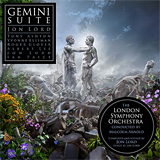
Jon Lord - Gemini Suite (Cover)Back in 1969, the lineup of Deep Purple had seen a drastic change: Jon Lord, Ritchie Blackmore and Ian Paice split up with singer Rod Evans and bass player Nick Simper and hired the former Episode Six musicians Ian Gillan and Roger Glover to complete the lineup.

One of the first shows to feature the new lineup was the live performance of Jon Lord’s “Concerto For Group and Orchestra”, an ambitious work to unite the different worlds of a rock band and a full orchestra which lay the foundation for Jon Lords career as composer / writer and solo artist. About a year later, the follow-up of the “Concerto” faced the light of day during a live performance at the Royal Festival Hall, again featuring his Deep Purple bandmates and conductor Malcolm Arnold.

Contrary to the “Concerto”, which took more than 40 years to be recorded in a studio, Jon Lord went to the studio in 1971 to record “Gemini Suite” as a studio project. At that time, the rock career of Deep Purple was in full flight and Ian Gillan and Ritchie Blackmore showed no interest in participating in the recording and were replaced by guitar player Albert Lee , multi talented Tony Ashton and singer Yvonne Elliman.

While the “Concerto” had its focus on band and orchestra as a whole, “Gemini Suite” did focus on the different instruments, dedicating a track to guitar, piano, drums, vocals bass guitar and organ respectively.

The first CD release was a straight release in 1987 on Line Records in Germany being the only official (and now long deleted) version until the remastered release on Purple Records more than 20 years later. The 2016 release is not based on any of those previous versions and features new artwork and a new remaster by Rob Cass, based on the original stereo mixes of the album.

Not owning the 2008 remaster, a comparison with the 1987 release shows quite some improvement in sound quality with more details being audible than on the original CD release. Luckily, the remaster doesn’t follow the popular trend of brick-walling every track and preserves the dynamics and overall feel of the original recording. The booklet gives no explaination why the original artwork has been dropped and was replaced by completely new design, but the new foreword by Roger Glover adds some enjoyable pages to the booklet.

Only thing to criticize is the record company did not use a proper Digipak for the release and decided to go with some LP-like fold-out papersleeve instead, resulting in your CD getting the first fingerprints and scratches before even being played.


Album-Highlights 2012

01. Januar 2013 · Audio · andreas · Kein Kommentar
Albumcover

Meine Album-Highlights des Jahres 2012 in alphabetischer Reihenfolge:

Anderson / Wakeman - The Living Tree in Concert - Part One

Rick Wakeman und Jon Anderson auf gemeinsamer Konzertreise mit einer grandiosen Mischung aus Yes-Klassikern und Tracks des “The Living Tree"-Albums.

Rosanne Cash - 10 Song Demo

Ein Neuanfang in vielerlei Beziehung und anders als der Album-Titel suggeriert mit 11 Songs in spärlicher Instrumentierung.

Delain - We Are the Others

Delain gehen konsequent ihren Weg weiter und veröffentlichen mit “We Are The Others” ein Album, das gegenüber “April Rain” nochmals eine Steigerung bedeutet.

Jon Lord - Concerto For Group And Orchestra

Posthum veröffentlicht, zeigt die erste Studioaufnahme das “Concerto” so, wie es bisher nur in der Vorstellung Jon Lords existierte.

Yohanna - Butterflies and Elvis (Original-Release von 2008)

Durch ihre ESC-Teilnahme 2009 auch einen breiteren Publikum bekannt geworden, ist “Butterflies and Elvis” das erste “erwachsene” Album des ehemaligen isländischen Kinderstars.

Maßgebend war das Anschaffungs-, nicht das Erscheinungsdatum.

"Concerto" talk with Paul Mann

14. Oktober 2012 · Verschiedenes · andreas · Kein Kommentar
Dieser Beitrag ist in Deutsch nicht verfügbar.

On October 1st, 2012 “The Highway Star” had the opportunity to do an interview with Paul Mann. Being the conductor of the 1999 “Concerto For Group And Orchestra” performance and the subsequent Deep Purple world tour, Paul became a close friend to Jon Lord. Being also heavily involved in the making of the brand new studio recording, he shares some insight on various topics.

… choosing the musicians

Right from the start my feeling was – and it was one Jon shared – that we should try to make this new recording about the piece itself, as a composition of Jon’s - to try and cast the net wider than Deep Purple. Which is not to take anything away from them - they made it so much their own through the original performance and the thirty or so performances we did between 1999 and 2001. But for some people it became regarded as Deep Purple’s rather than Jon’s Concerto for Group and Orchestra.

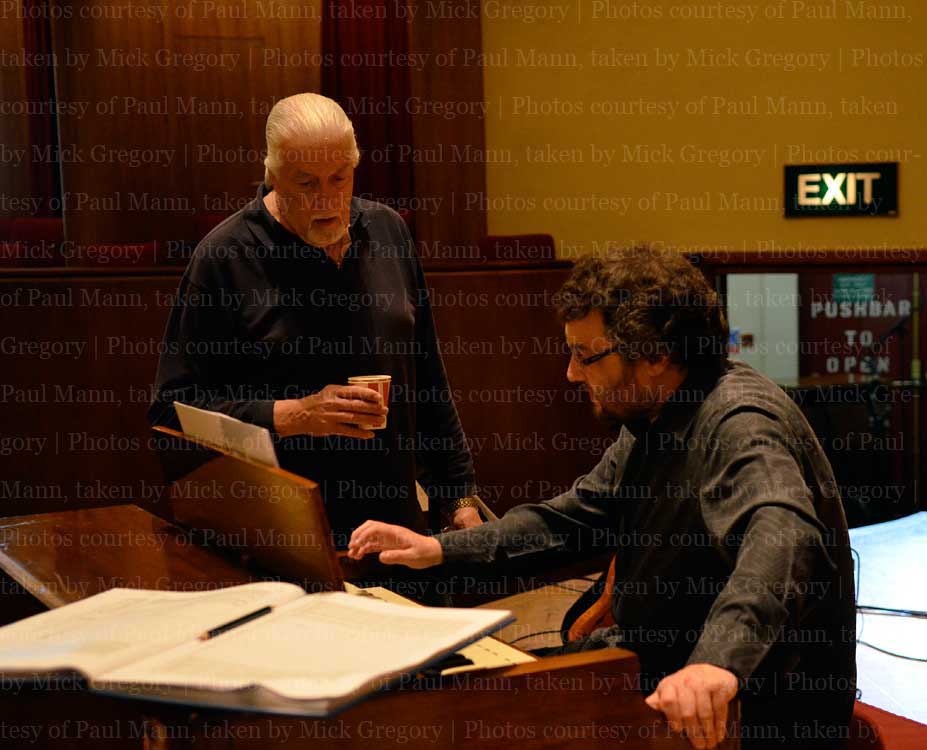
Jon Lord and Paul MannI wanted to try to make a recording that came as close to what I understood as his intention and certainly my own feelings about the piece, and to bring it as close to the ideal as we possibly could. The idea was to try to choose people that would be suited to each particular part rather than to use a single band. We would sort of handpick the guitarists, and what we ended up with was a very interesting cross-section of people:

Darin Vasilev, this Bulgarian guitarist who Jon had played live with a few times and had really loved his playing. I didn’t conduct any of those performances, but he told me about this amazing guy and said “I think we really should have him on the recording.“ He’s been the real discovery of this project for me - really outstanding. Joe [Bonamassa] of course is such a great blues guitarist that he’s perfect for the second movement.

When it came to the third movement, all sorts of names were being mentioned and finally I said to Jon: “Look, everyone that we’re thinking of, I would end up saying to them: go and listen to what Steve Morse did back in 1999 and do something like that!” And if you’ve got a great star name, you can’t start telling them to play like someone else, so in the end I just said to Jon “Why don’t we just ask Steve to do it?” So I called him, and he was in the middle of writing sessions for the new album in Germany and as usual was massively busy, but he dropped everything and said “Yes of course, anything for Jon. I’ll do it tonight." A couple of days later I got some e-mails with three completely different takes of the whole movement. It was incredibly difficult to choose one. I wanted to release them all as extras so everyone could hear how great they were. Maybe we will one day. Thirtieth anniversary remaster…

But in the end it was good to have Steve alongside Jon to represent the quintessential spirit of Deep Purple and also still have a way to acknowledge everything the band did for the piece. It’s a good way of having the best of both worlds in that sense.

Vollständigen Beitrag lesen


Jon Lord - Concerto for Group and Orchestra

13. September 2012 · Audio · andreas · 7 Kommentare

Jon Lord - Concerto for Group and Orchestra (Cover)Neueinspielungen sind ein gewagtes Unterfangen: hat der Künstler aus seiner Sicht gute Gründe (rechtlich, klangtechnisch, songschreiberisch, …) ein bereits veröffentlichtes Werk nochmals aufzunehmen, reagiert die Umwelt in der Regel skeptisch: Fans kennen und lieben das Original genau so, wie es seinerzeit veröffentlicht wurde und reagieren sensibel auf jede Änderung; manch einer vermutet auch lediglich die Eröffnung neuer Einnahmequellen mit möglichst geringem Aufwand.

In der Filmbranche zeigt George Lucas bereits seit Jahren, wie das Herumbasteln an der eigenen Legende den Ruf nachhaltig schädigen kann: jede neue “Star Wars”-Edition ändert noch ein bißchen mehr am bereits überarbeiteten Material, wobei nicht nur optische Elemente aufpoliert, sondern auch inhaltliche Änderungen vorgenommen werden - sehr zum Frust der zahlreichen Anhänger der ursprünglichen Versionen.

Mit dem 2012’er Release des “Concerto For Group And Orchestra” wagt sich Jon Lord an die dritte Aufnahme seines wegweisenden Werks von 1969, welche gleichzeitig auch die erste Studioaufnahme ist.

Die Uraufführung, anschließend als Deep Purple-Album veröffentlicht, stand unter keinem guten Stern: nicht nur einige seiner Bandkollegen brachten dem Projekt nur mäßige Begeisterung entgegen, auch das Royal Philharmonic Orchstra war von der Idee, zuammen mit einer Rockband zu musizieren, alles andere als angetan. So ist es wohl hauptsächlich dem Dirigenten Sir Malcolm Arnold zu verdanken, daß die Aufführung überhaupt ohne größere Zwischenfälle über die Bühne gehen konnte. Nach nur einer weiteren Aufführung 1970 in den USA ging die Partitur verloren, was gleichzeitig das Aus für das “Concerto” bedeutete.

Glücklicherweise gibt es allerdings Menschen wie den holländischen Musiker und Komponisten Marco de Goeij, der in mühevollster Kleinarbeit die Partitur mit Hilfe der 1969’er Aufnahmen weitestgehend rekonstruieren konnte, was in einer erneuten Aufführung des “Concertos” 1999 in London sowie einer anschließenden Deep Purple-Orchestertour in den Jahren 2000 / 2001 resultierte. Bereits hier hatte Jon Lord einige Änderungen gegenüber der Originalversion eingearbeitet, war jedoch mit dem Ergebnis noch immer nicht vollständig zufrieden.

“Over these last years since leaving Deep Purple, I’ve played it over 30 times with different orchestras and conductors all over the world, and, of course, in 2000 I did it well over 30 times with Purple on the Concerto tour, so I’ve been honing the piece live on stage, and I’ve had the opportunity to change things in the score that weren’t sounding quite right. It is therefore a marvellous and exciting prospect to have the definitive recording of the definitive version of the score.” [Jon Lord May 2012]

Zur Realisierung der Neuaufnahme holte Jon Lord den Dirigenten Paul Mann mit ins Boot, der bereits 1999 sowie auf der anschließenden Tour den Taktstock geschwungen hatte. Die Rhytmussektion wurde mit Guy Pratt sowie Brett Morgan ebenso hochkarätig besetzt wie die Gitarrenriege, in der neben Darin Vasilev und Joe Bonamassa auch Steve Morse vertreten ist, der bereits an der 1999-Aufnahme mitwirkte. Ein besonderer Coup gelang Jon Lord bei den Vocals, hier übernimmt neben den beiden Musikern seiner “Hausband” Steve Balsamo und Kasia Laska auch Bruce Dickinson einen Gesangspart.

Schon kurz nach dem Drücken der “Play”-Taste überrascht die Dynamik der Aufnahme mit einer Spannweite, wie sie bei aktuellen Produktionen leider nur noch selten zu finden ist und steigert sich, wenn Band und Orchester gleichzeitig loslegen, zu einem beeindruckenden Klangerlebnis.

Im Studio sicherlich kontrollierter agierend als in einer Live-Situation schaffen es Paul Mann und das Royal Liverpool Philharmonic Orchestra trotzdem, jeglichen Anflug von Sterilität zu vermeiden und das Zusammenspiel deutlich lebendiger zu gestalten als das Royal Philharmonic Orchstra 1969. Die Bandparts hingegen, auf der Originalaufnahme teilweise improvisiert, wirken deutlich arrangierter und kontrollierter, was dem Gesamteindruck jedoch nicht schadet.

Der Gesang wurde zweigeteilt: den ersten Teil übernimmt Steve Balsamo, ergänzt um Background-Harmonien von Kasia Laska, während im zweiten Teil Bruce Dickinson mit einer gefühl- und gleichzeitig kraftvollen Performance unterstreicht, welch großartiger Sänger er ist.

Insgesamt halten sich die Änderungen zum Originalwerk in Grenzen - zumeist sind es nur kleinere Schönheitsreperaturen um Übergänge gefälliger zu gestalten oder Kürzungen, um den Spannungsbogen zu intensivieren und genau wie 1999 scheinen die meisten Änderungen gegenüber der Originalaufnahme das “Third Movement” zu betreffen.

Jon Lord, der am 16.Juli 2012 verstarb, konnte vor seinem Tod den finalen Mix des “Concertos” noch fertigstellen und freigeben. Für ihn schließt sich der Kreis, denn das Werk, welches als erstes die volle Aufmerksamkeit auf seine Fähigkeiten als Komponist lenkte wird gleichzeitig auch die letzte Veröffentlichung sein, die unter seiner Regie entstand.

Erstaunlich, wie etwas “so altes” so frisch klingen kann.